Har Ki Pauri, Haridwar
 The word Haridwar means the Gateway to Lord Vishnu in the Vaishnav tradition. It is also called Hardwar in the Shaivite tradition, meaning "Gateway to Lord Shiva". Therefore, Haridwar is also called the gateway from the earthly to the heavenly realms. It is one of the four places where drops of the divine nectar, Amrita, fall at the site which later came to be known as Brahma Kund. The site is located near Har Ki Pauri. Devotees around the world have been coming here from ancient times to take a dip in the holy Brahma Kund, which is also supposed to possess healing properties. It is the point where Ganga ji leaves the Shivalik ranges and enters the northern plains of India.
Meaning of Har Ki Pauri, Haridwar:
Har Ki Pauri, meaning ‘steps of Lord Vishnu’, is the main pilgrimage site in Haridwar. It has Brahma Kund, where drops of Amrita fell after the ocean was churned from the heavenly container. It is believed that bathing in this Kund has healing properties. Lakhs of devotees across the globe visit Har Ki Pauri every year to take a dip at the Brahma Kund. King Vikramaditya has constructed Har Ki Pauri for his brother Bhartari. It has also become famous for Ganga Aarti, Asthi Visarjan, Pind Daan, and Antim Sanskar.
The story of Brahma Kund at Har Ki Pauri:
The story of Brahma Kund is related to many mythological episodes. When Mother Ganga was about to descend to Earth, Lord Brahma built a large, container-like structure to welcome her. Lakhs of devotees from across the globe visit Brahma Kund every year to take a dip in the divine Kund, which is also believed to possess healing properties.
Another very important episode from Hindu mythology, which makes it more prominent, is the battle between gods and demons to drink the divine nectar, Amrita, that came after the churning of the mother Ganga. It is believed that a few drops of Amrita fell into the Brahma Kund, which makes it a major pilgrimage site in Haridwar for devotees.
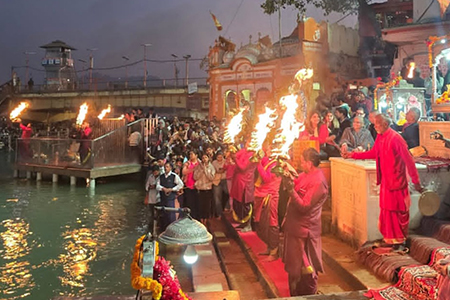
It is also the main centre for the famous Har Ki Pauri Ganga Aarti, featuring Vedic chanting, diyas, incense, and lamps.
Har Ki Pauri Ganga Aarti and Timing:
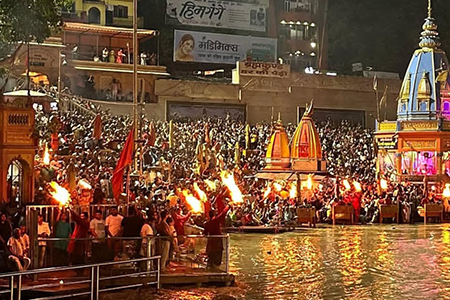
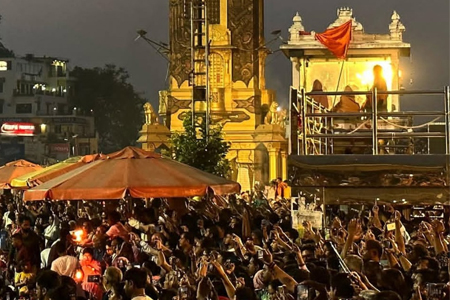
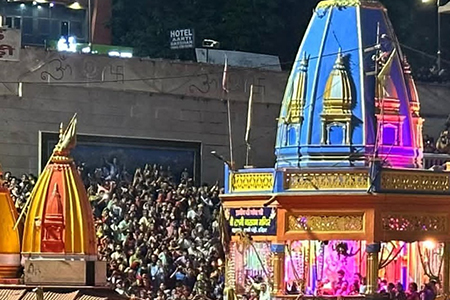
The Ganga Aarti at Har Ki Pauri is the most famous in India, with thousands of devotees gathering to sing, dance, and soak in the divine presence of Mother Ganga. It is one of the main attractions in Haridwar.
The aarti happens twice daily: once in the morning and once at sunset. The morning aarti starts around 5.30 am and ends around 6.30 am, and the evening aarti starts around 5.30 pm and ends around 7 pm during sunset.
People start gathering one hour early at the ghat to reserve a front seat for a clear view of the aarti and Mother Ganga.
The pandits prepare lamps and Puja items, and the invocation is performed with the divine mantras. The whole atmosphere is lit with lamps, and the sound of bells, conches, etc., fills the air. Aarti is also sung by pandits and devotees on the speakers.The Ganga aarti is followed by Deep Daan, in which devotees offer diyas, flowers, coins, and other offerings to Mother Ganga.
Best time to visit Har Ki Pauri, Haridwar:
The best time to visit Har Ki Pauri is from October to April, when the weather is pleasant. It can be visited at any time of the day during these months.
It is hotter in the summer; therefore, early morning and the evening are most favourable. It should be avoided during the monsoon season by senior citizens and kids, as water levels are generally high.
Things to do at Har Ki Pauri, Haridwar:
1. A dip in the Ganga: An early morning or evening dip in the Ganga ji is the first thing one should do while visiting Har Ki Pauri. Brahma Kund is also located at Har Ki Pauri, which is also very famous for taking a dip.
2. Perform Rituals: It is also a place to perform various rituals such as Pind Daan, Immersion of ashes, Mundan Sanskar, etc. Performing rituals at Kar Ki Pauri is considered highly beneficial, as it contains the footprints of Lord Vishnu.
3. Ganga Aarti: An early morning and evening Ganga Aarti is not an activity to miss at Har Ki Pauri. It happens in the lap of Ganga ji and the mountains.
The chanting of mantras, ringing bells, soothing sound of conch shells, fragrance of incense sticks, and the mesmerising beauty of lamps make the atmosphere divine and energetic.
4. Meditation: It is a wonderful place for Sadhaks to meditate and rejuvenate, as the Shivalik ranges of mountains make it conducive for meditation.
5. Others: There are various small temples on the ghat, which can also be visited. Snacks from local vendors can be cherished.
Key rituals at Kar Ki Pauri, Haridwar:
Various rituals are performed at Har Ki Pauri by devotees visiting Haridwar:
1. Pind Daan: It is the symbolic offering of rice balls to the ancestors with water mixed with sesame seeds and barley. Rice balls represent the body of the soul. The deceased's eldest member usually offers it.
2. Asthi Visarjan (Immersion of Ashes): It is the immersion of some portion of the ashes of the deceased in Ganga ji, making way for the journey ahead.
3. Mundan Sanskar: It is the official shaving of the head of the child. It is one of the important Sanskaras of Hinduism, which takes place at Har Ki Pauri.
4. Pitra Dosh Nivaran Pooja: Tripindi Shradh and Narayan Bali Shradh are also performed at Har Ki Pauri as part of this pooja. Families unable to perform the deceased's last rites properly may face blockages in their day-to-day life.
Places to visit near Har Ki Pauri, Haridwar:
There are many places to visit near Har Ki Pauri. Local Markets, Brahma Kund, Mansa Devi Temple, Maya Devi Temple, Chandi Devi Temple, Bhimgoda Kund, Daksh Mahadev Temple, Anandmayi Ma Ashram, Bharat Mata Mandir, Rajaji Tiger Reserve, etc.
How to reach Har Ki Pauri:
Train: Haridwar Junction is the nearest railway station to Har Ki Pauri, about 3-4 km away. The railway station is connected to all the major cities. Shared autorickshaws, taxis, cabs, etc. are easily available.
Road: Haridwar is well-connected to nearby cities via expressways. One can easily reach Haridwar via Delhi, Dehradun, Rishikesh, Meerut, and other routes. Buses, cabs and shared taxis are also available from these cities.
Air: The nearest airport is Jolly Grant Airport in Dehradun. Taxis and Cabs are easily available from the airport for Haridwar.
Local Transport: Many state-run buses are also available for Haridwar. Uttar Pradesh Tourism and Uttarakhand Tourism operate buses to Haridwar daily at different times. Their tickets can be booked both online and on-site.
Conclusion:
Har Ki Pauri today embodies India’s cultural, religious, and socio-economic values. It is much more than a place and has been significant since time immemorial. It has become a place for devotees from all states of India to come together and host religious gatherings and conferences for future generations.